





Tartar on Kids' Teeth: How to Remove Tartar From Kids’ Teeth

Have you noticed a yellowish line building up along your child’s gumline that won’t go away no matter how thoroughly you brush? That’s very likely tartar on kids’ teeth. It requires a dental professional’s removal.
Tartar starts as plaque, which CAN be removed at home. But plaque hardens into a calcified deposit within 24-72 hours, at which point it can cause more serious oral health complications. Tartar is especially prominent in children because they don’t brush well enough.
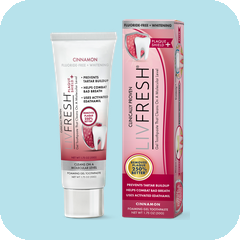
Not to worry. We’ll discuss tartar buildup on kids’ teeth and explain how you can prevent it going forward. Brushing with LIVFRESH Kids+ Toothpaste helps reduce tartar buildup by cleaning teeth on a molecular level with a patented formula. Learn more below!
Key Takeaways
- Tartar is hardened plaque that can only be removed by a dental professional.
- Plaque only needs 24-72 hours to transform into tartar, which is why twice-daily brushing is non-negotiable.
- Look for tartar on kids’ teeth near the gumline and especially below the lower front teeth.
- Brushing with LIVFRESH removes plaque 250% better than a leading ADA-approved toothpaste.
What is Tartar on Kids' Teeth?
Tartar, also called dental calculus, is mineralized plaque on the surface of teeth. Which means to really understand tartar, you have to first understand plaque.
Plaque forms naturally throughout the day as bacteria mix with saliva and food particles. Minerals in saliva bond with the film as it sits, eventually hardening into a rough, calcified deposit. That’s tartar.
Tartar can form on baby teeth and permanent teeth alike. It doesn’t discriminate. If it’s given ample time to form, it will. Some children just happen to end up with tartar buildup faster because of their saliva chemistry and diet.
You can identify tartar as a yellow or brownish patch near the gumline or between the lower front teeth. It feels rough to the tongue, and it looks much different than the smooth enamel around it.
Is Tartar Dangerous?
Tartar is painless, which is part of the problem. It can go undetected if you aren’t monitoring your little one’s oral hygiene. Make no mistake, though. No matter how innocuous it seems, tartar can lead to a cascade of oral health complications.
The rough surface of tartar is the perfect foothold for fresh plaque to form. It’s a vicious cycle. The more tartar your child has on their teeth, the easier it becomes for tartar buildup to spiral out of control. This is what happens when kids don't brush their teeth consistently.
The real reason you must learn how to remove tartar from kids’ teeth is that it can irritate gum tissue and eventually lead to periodontitis - or gum disease. Gingivitis is the early stage, characterized by bleeding gums and sensitivity.
Tartar can also trap bacteria against the tooth surface, leading to a higher risk of tooth decay. So, how do you handle tartar buildup on kids’ teeth then?
How to Remove Tartar From Kids’ Teeth
Tartar removal must be handled by a dental professional. Even the best toothpaste supported by dentists cannot remove it at home.
A dental hygienist or even your child’s dentist themself will use a specialized instrument known as a scaler. They carefully remove the calcified deposits from the tooth surface and below the gumline.
This happens during each 6-month checkup, because the truth is, some tartar on kids’ teeth is inevitable. However, your dentist may suggest you schedule an extra visit between their regular 6-month appointments if your kid suffers from heavy buildup.
Tartar removal is generally painless, but it can certainly be scary and uncomfortable for your little one. Hygienists can adjust pressure and apply numbing gel if needed. You may want to sit in the room with your kid, distract them with their tablet, or put on a movie for them.
Preventing Tartar Buildup on Kids’ Teeth Going Forward
Tartar prevention starts with learning how to get plaque off kids' teeth in a timely manner. Because while you cannot remove tartar with a toothbrush, you can certainly prevent it from forming in the first place! Here are the basic measures:
- Brush twice a day with a soft-bristled brush angled at 45 degrees to the gumline
- Spend the full two minutes each session
- Focus on the spots where tartar forms fastest: behind the lower front teeth and along the gumline of upper molars
- Use an electric toothbrush with a timer if your child rushes through sessions
Our blog has a great resource on fun ways to get kids to brush their teeth. Consistency is everything. But so is using the best kids' toothpaste. It has to be something your child can commit to using, and it also needs to effectively clean teeth.
Keep Tartar Buildup at Bay With LIVFRESH
LIVFRESH Kids+ Toothpaste helps reduce tartar buildup with a patented formula that cleans teeth on a molecular level. Brushing with LIVFRESH removes plaque 250% better than a leading ADA-approved toothpaste, so there’s less sticky buildup to harden into tartar.
Plus, it’s made with safe, food-grade ingredients. No abrasives, dyes, or fluoride. It’s safe to swallow, although it’s good to get your kiddo in the habit of spitting in the sink as early as you can. Your child will love the bubblegum flavor, too.
Regular Flossing is Non-Negotiable
Other than smarter brushing techniques, you should make sure your kid is flossing daily. Or, you should be flossing FOR them if they’re too young to adopt this habit on their own.
Dr. Amr Moursi with the Department of Pediatric Dentistry at NYU College of Dentistry says that “a toothbrush removes plaque, but it mainly targets the front and back of teeth.”1 The plaque hiding between them goes undisturbed, and that’s where tartar on kids’ teeth tends to take hold.
Floss once a day, ideally before bed, to clear what bristles miss. We recommend floss picks over string floss, especially as your child begins flossing their own teeth. They’re so much easier to use.
References
- Moursi, A. "Yes, you really need to floss every day." NBC News. NBC News


LIVFRESH Kids+ Bubble Gum - 4 Pack (Subscription)
This article is for general educational purposes and is not a substitute for advice from your dentist or healthcare provider. Where this article describes gum health benefits of a LIVFRESH product, including help with bleeding gums, gingivitis, or periodontitis, those benefits refer to the LIVFRESH Gum Protect+ product line and do not apply to our fluoride-free formula. Gingivitis and periodontitis claims are based on CE Mark certification. These statements have not been evaluated by the U.S. Food and Drug Administration.