





Swollen Gums in Kids: Common Causes and Treatment

Swollen gums in kids often show up without any warning. Your child might start crying while trying to eat an apple, or you notice red, puffy tissue along their gumline when they laugh.
Most cases aren’t cause for concern. It could be irritation, or maybe you just need to help them practice better oral hygiene. However, some instances do call for a dentist’s intervention. We’ll show you what causes swollen gums in kids and how to treat the ailment at home.
Key Takeaways
- Swollen gums in children are often caused by teething, injury, infection, or plaque buildup.
- Cold compresses, salt water rinses, and better brushing habits can help calm irritation.
- Brushing with LIVFRESH Kids+ Toothpaste removes plaque 250% better than a leading ADA-approved toothpaste.
- See a dentist if swelling lasts more than a few days or comes with fever/pus.
What Causes Swollen Gums in Kids?
There is a chance your child’s swollen gums are simply the result of teething. But if your little one already has all their baby teeth, it is obviously something else. Let’s take a closer look at what causes swollen gums in kids so you can decide which treatment is necessary.
Teething
The most common cause of swollen gums in children under age 3. It’s every parent's least favorite phase because there is little you can do to help your little one through the pain. Gums become swollen, red, and tender as teeth push through the tissue.
It starts around 6 months for most babies, though many won’t see their first tooth until their first birthday. Teething usually comes with drooling, irritability, and in some cases, low-grade fever. Swelling shifts as different teeth emerge. That’s how you distinguish teething from other causes.
Injury
A fall on the playground, a stray elbow, or a toy that hits them in the mouth - kids constantly bump their faces. You may shrug it off as no big deal once they stop crying. But the gum tissue could be irritated for a few days after the incident.
Infection
An abscess can form from a cavity going untreated so long that it pushes infection into the surrounding gum tissue. This type of swelling tends to affect just one area rather than the whole mouth. It comes with pain, a bad taste, and/or a blister-like bump. This one calls for a dental visit. You can’t remedy it at home.
Poor Oral Hygiene
Plaque slowly but surely accumulates along the gumline when brushing gets rushed or skipped altogether. That sticky film is actually quite irritating to the sensitive gum tissue, causing redness and puffiness. A lot of parents chalk it up to teething.
This type of gum swelling is a little more concerning. Dr. Rosalyn Sulyanto with Boston Children’s Hospital explains why. “While a cavity affects only the tooth, gum disease can inflame the gums and damage the bones and surrounding tissues of the mouth.”1
Further to that point, Boston Children’s Hospital estimates that about half of all children have some form of periodontal disease. Nearly all of this starts with plaque on kids’ teeth.
How to Treat Swollen Gums in Kids
There are two ways you can go about treating swollen gums in children - easing the discomfort and correcting the issue. You should make both a priority.
Cold Compress
Press a cold, damp washcloth against the outside of the cheek to ease swelling and numb the area. A chilled (not frozen) teething ring does the same thing for teething babies. 10 minutes on, 10 minutes off.
Salt Water Rinse
This is a great option for kids that are old enough to not swallow it (ages 6+ usually). A warm salt water rinse soothes inflamed tissue. Stir half a teaspoon of salt into 8 ounces of warm water. Swish for 30 seconds, then spit. You can do this once or twice a day.
Better Oral Care
We spoke to the plaque problem earlier, but it’s so important that we really want to drive it home. Dr. Katherine Chin is the Clinical Medical Director of Pediatric Dentistry at Children's Hospital Colorado. She says, “Gum disease, like cavities, is caused by plaque that's left on the tooth.”2
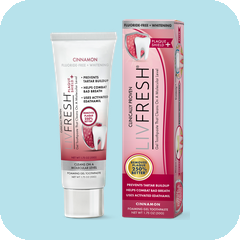
So, how do you keep plaque buildup at bay? It starts with getting the best kids’ toothpaste in your child’s routine. Activated Edathamil, the primary ingredient in LIVFRESH Kids+ Toothpaste, is backed by 40 clinical studies and 40 patents showing that brushing with it can clean teeth on a molecular level.
But the best part for a child with swollen gums is how gentle the formula is. No abrasives or aggressive foaming agents, so you won’t make matters worse from a comfort perspective. Kids love the bubblegum flavor, too.
Twice-daily brushing, 2 minutes per session, is non-negotiable. If you’re still brushing your kids’ teeth, make sure you are using a toothbrush with soft bristles and angling it along the gumline where buildup likes to hide.
When to See a Dentist
Schedule an appointment ASAP if your kids' swollen gums last more than a week, appear to be getting worse, or come with fever, pus, or difficulty eating.
We would also be concerned to see swollen gum tissue around a single tooth, as that could be a clue of an underlying infection. A dentist will be able to drain an abscess safely if that’s what’s giving your little one grief.
Really, you should get in the habit of putting your child in the dentist’s chair once every six months. This is proactive oral care, so you don’t have to be reactive as issues pop up seemingly out of nowhere.
Avoiding Kids’ Swollen Gums Going Forward
Treating swollen gums in children is an ongoing battle. But fortunately, you now know what causes swollen gums in kids - outside of teething, it can almost always be traced back to poor oral care.
What happens when kids don't brush their teeth goes beyond cavities. The sticky buildup that collects along the gumline and between teeth can lead to gum swelling in children. Effective cavity prevention for kids and gum care both begin at the sink, with a toothbrush, twice a day.
We get asked all the time - when can kids use regular toothpaste? If you mean one like LIVFRESH Gum Protect+, that’s around the age of 12. This formula is clinically shown to help reduce gingival inflammation and gum bleeding 400% better than an ADA-approved toothpaste.
In the meantime, though, brushing with LIVFRESH Kids+ Toothpaste can help keep that troublesome plaque at bay. Add it to your child’s oral care ritual today!
References
- Sulyanto, R. and Grady, V. "Children and parents can prevent harmful gum disease." Boston Children's Answers. Boston Children's
- Chin, K. "Top Dental Health Questions." Children's Hospital Colorado. Children's Hospital Colorado


LIVFRESH Kids+ Bubble Gum - 4 Pack (Subscription)
This article is for general educational purposes and is not a substitute for advice from your dentist or healthcare provider. Where this article describes gum health benefits of a LIVFRESH product, including help with bleeding gums, gingivitis, or periodontitis, those benefits refer to the LIVFRESH Gum Protect+ product line and do not apply to our fluoride-free formula. Gingivitis and periodontitis claims are based on CE Mark certification. These statements have not been evaluated by the U.S. Food and Drug Administration.